Qoobo: The registry's control specimen: minimum robot, maximum effect
Cauda pulvinar
IN VERIFICATION IN STOCK
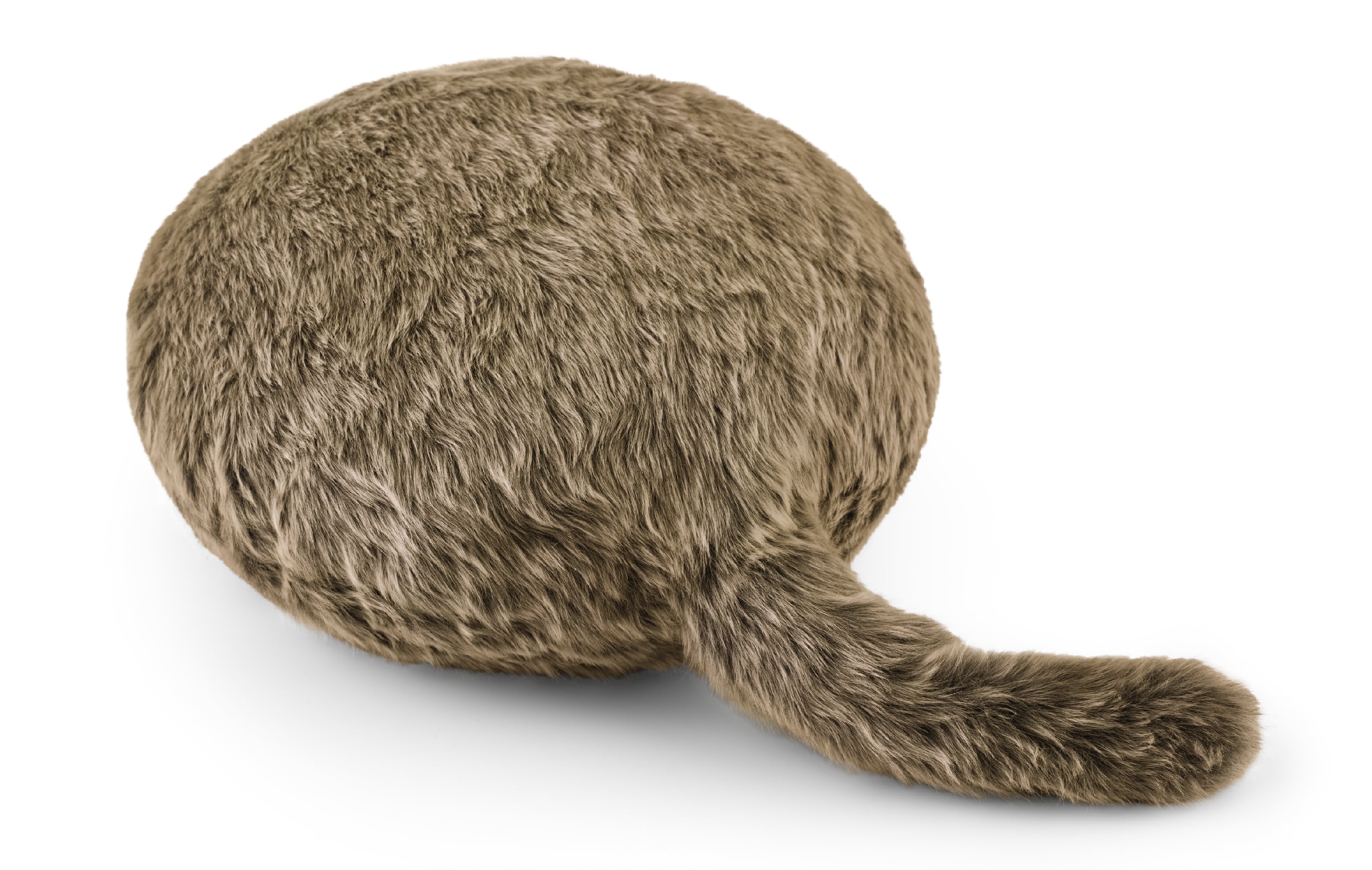
Qoobo is Yukai Engineering's tail-wagging therapy cushion — a headless cat pillow whose tail responds to petting; Petit Qoobo ($144) is the smaller, purring version. An icon of Japanese healing robotics, shipping to 100+ countries with stock that cycles in and out.
What it is
Qoobo is a cushion with a tail. This sentence has been the entire product description since Yukai Engineering shipped it, and no elaboration has improved on it: a round, furred pillow ($180; the smaller, purring Petit Qoobo, $144) whose tail responds to petting with a repertoire from lazy sway to full delight-thrash. There is no face, no app, no account, and no cloud — the registry’s minimum viable creature.
Observed behavior
The field pattern is remarkably consistent across a decade of owner reports: visitors laugh at it, pet it once to be polite, and are found twenty minutes later with it on their lap. The tail’s response mapping — gentle strokes produce slow movement, vigorous petting produces enthusiasm — is simple enough to learn in a minute and rich enough that owners describe distinct “moods.” Yukai built its healing-robotics reputation on this object, and the therapy-adjacent literature around Japanese robot companions regularly features it.
Field recordings & photographs
-
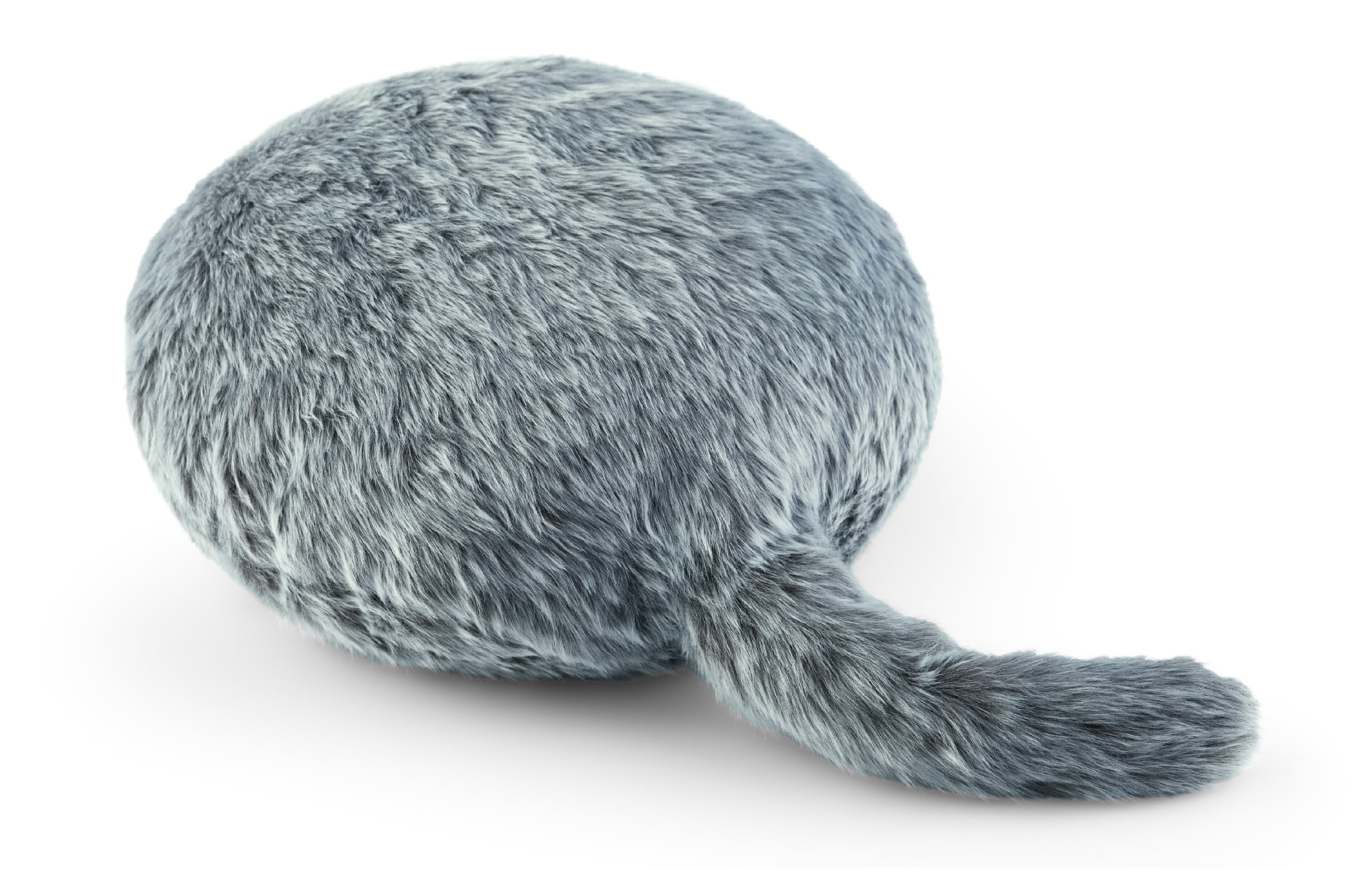
Product shot of Qoobo in Husky Gray colorway -

Top hero image from the official Qoobo product page -
Qoobo is A Robot With A Tail That heals your heart. · Inventions World · view count not verifiable as of Aug 2026 · 2020
A third-party walkthrough of what the tail actually does when you stop petting it — less than you'd hope, exactly as advertised.
Watch on YouTube -
Qoobo unboxing · RobotXperience · view count not verifiable as of Aug 2026 · 2018
Qoobo joins an existing household robot collection straight out of the box; the first hug settles whether the wag reads as alive.
Watch on YouTube -
Qoobo | A Tailed Cushion That Heals Your Heart · ユカイ工学 / Yukai Engineering Inc. · view count not verifiable as of Aug 2026 · 2017
The manufacturer's own pitch: ninety seconds of tail choreography, no claims a cushion can't keep.
Watch on YouTube
Living with it
Qoobo asks nothing: hours of use per charge, a washable cover question answered in the FAQ (spot-clean; the fur is part of the machine), stock that cycles in and out of the global store, and Amazon as the steady fallback channel. The registry files it as the control specimen — the machine that tests how little robot a companion robot can contain and still work on humans. The answer, verified continuously since 2017 across care homes, offices, and at least one documented long-haul flight, appears to be: a tail. Households debating a $400 emotional-support machine could do worse than trialing the concept at $144 first.
Specifications
- Battery life
- ~8 h use
- Sensors
- touch
- Assembly required
- no
- Subscription
- none
- API
- none
- Cloud dependency
- none
- Firmware
- locked