Freenove Robot Kits: The Dev Experience, from GitHub Tutorials to ESP32
The budget kit workhorse publishes every line of code and every tutorial page free on GitHub — here's what building on Freenove's stack is actually like.
IN VERIFICATION
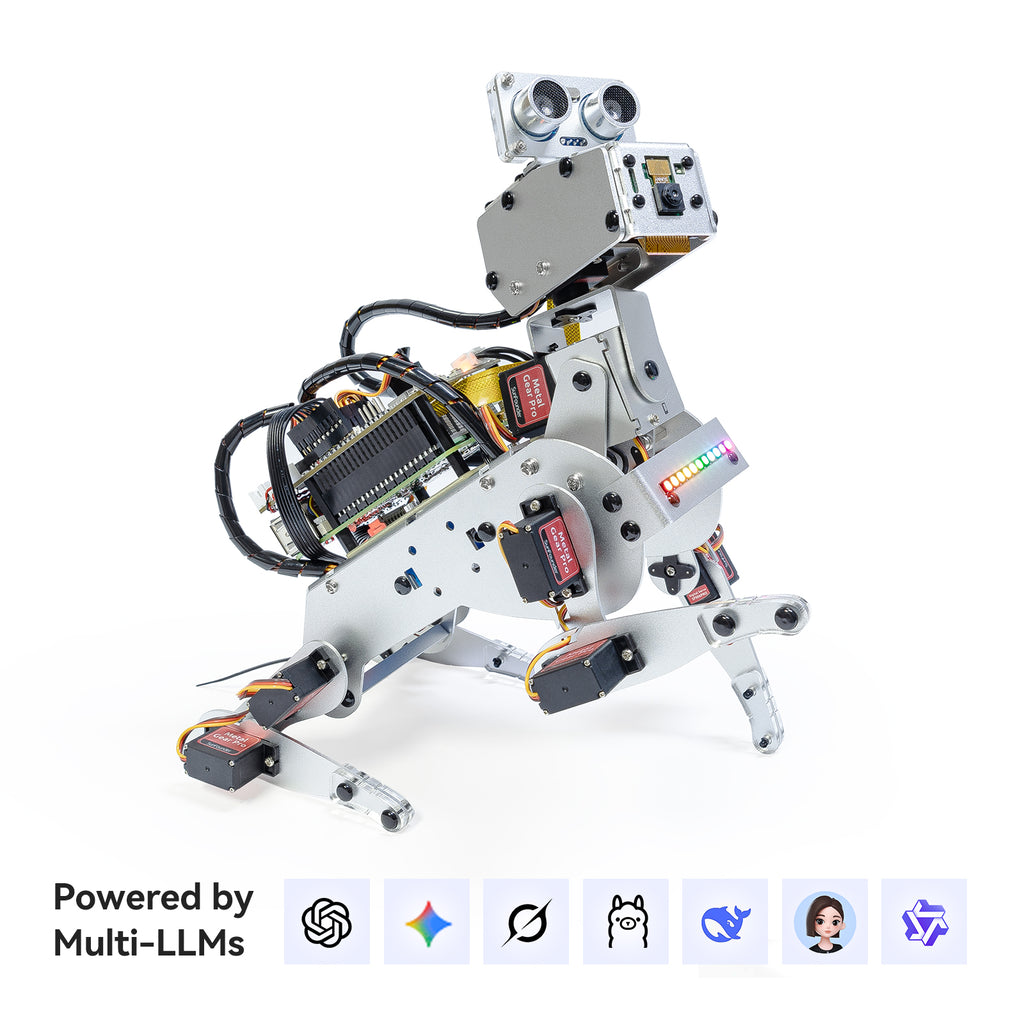
Freenove sells $50–170 robot kits — dogs, hexapods, tanks, cars — almost entirely through Amazon, and gives the entire software stack away: complete tutorials (PDFs running to hundreds of pages), all source code, and schematics, published per-kit on GitHub. For a family deciding between a sealed toy and a first real robotics project, that publishing model is the product.
The stack
Two brains, one pattern. Freenove kits split between Raspberry Pi models (the Robot Dog Kit, Big Hexapod) and ESP32 models (the cheaper dog and car kits). The Pi kits run Python with the code organized chapter-by-chapter against the tutorial; the ESP32 kits build in the Arduino IDE with C++ sketches. Both follow the same pedagogy: wire it per the schematic, run the chapter’s code, modify it, break it, fix it.
# Freenove Robot Dog Kit (Raspberry Pi) — the tutorial's server/client split
from Control import Control      # gait + servo orchestration
control = Control()
control.condition_forward()      # chapter code first, your code after
Registry pick: the Robot Dog Kit for Raspberry Pi ($129.99 as of Aug 2026) is the strongest tutorial-per-euro in the kit lane — and you can inspect the entire tutorial on GitHub before spending a cent.
What’s good: completeness. Every sensor and servo in the box appears in the tutorial with working code; nothing is left as an exercise for a frustrated parent at 9pm on December 25th. The GitHub repos are actively maintained, and the calibration chapters — the hard part of every legged kit — are unusually patient.
What the docs won’t do for you: abstraction. This is chapter-code, not a framework — no simulator, no formal API surface, no package you pip install. Projects grow by editing the provided files. That’s a fine on-ramp and a real ceiling: builders who outgrow it typically graduate to OpenCat’s framework discipline or the Pollen stack’s sim pipeline.
The registry’s read
Freenove is the strongest learning stack per euro in the registry’s kit lane — the tutorial is the moat, and it costs nothing to inspect before you buy: the entire experience is sitting on GitHub right now, which is exactly how a kit maker earns trust. Pair the Pi Robot Dog against Petoi’s Bittle X if you’re choosing between “learn everything” and “polished motion.”
Your first mod (no experience required)
Freenove’s chapter-code design makes the first mod almost ceremonial: give the dog your own trick name. Every behavior lives in a plainly named Python file you’ve already run by the time the tutorial’s done.
- Find the chapter folder with the movement code (the tutorial PDF names it — dog kits keep gaits in one obvious file).
- Copy the file. Never edit the original — this single habit is 80% of software engineering.
- In your copy, find the forward-walk call and change one number — step height or speed, the tutorial labels both — by a little. Run it.
- Bigger change, sillier walk. Congratulations: that’s parameter tuning, the same activity the RL people do with more math.
What you need: the kit you built, the Pi it runs on, ~20 minutes. You did it when: the dog walks wrong in the way you chose. If it goes wrong: delete your copy; the original chapter file is untouched, because you copied it first. Like we said.
Sources: Freenove’s per-kit GitHub repositories and published tutorials; kit listings on the official Amazon storefront. Specimen record for the Robot Dog Kit joins the registry per the publish order.
Registry recommendations from this report
SunFounder's PiDog shares the Pi-kit lane with better structure and the OpenClaw agent — the pick when the tutorial is the point but you want it to talk back.
Read the review →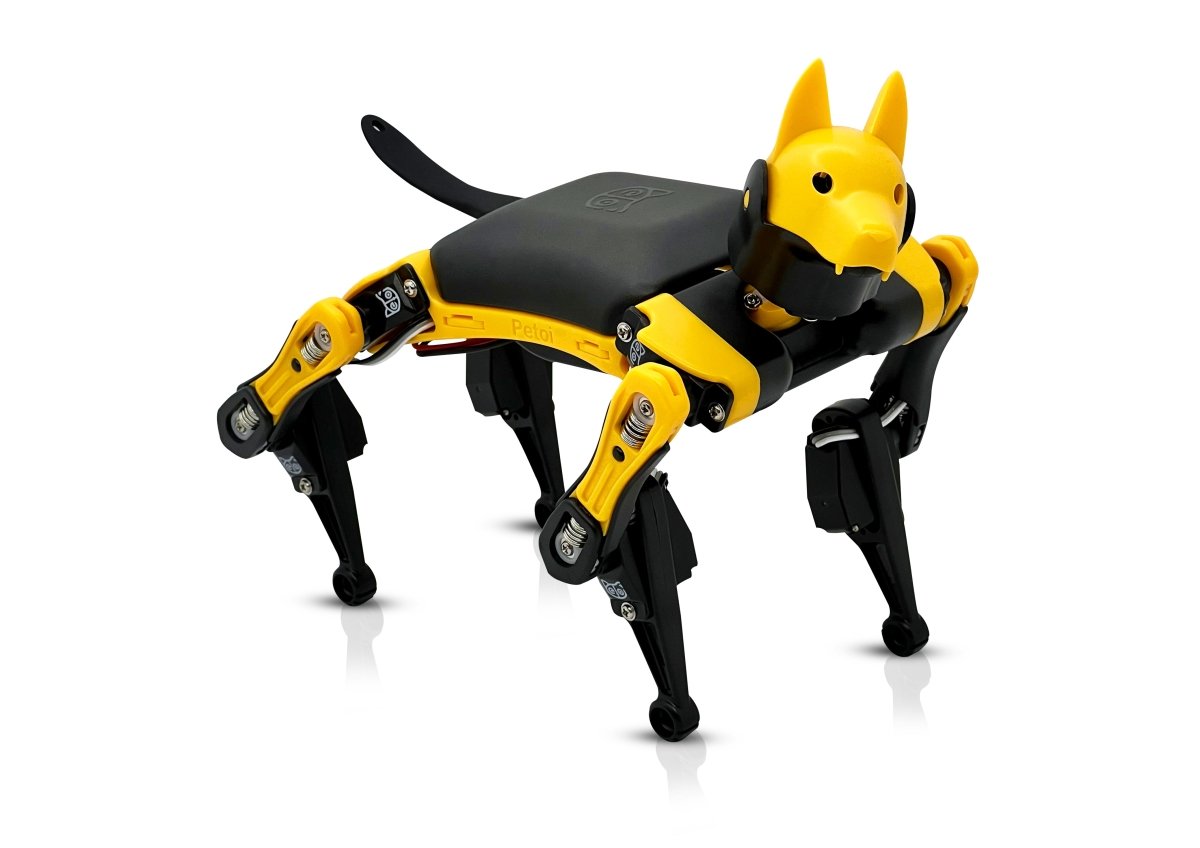
When chapter-code stops being enough: OpenCat is a real framework, and Bittle X is its polished reference build.
Read the review →The robots in this report
-
№ 0012 Kits
SunFounder PiDog
Canis raspberricus
IN STOCK
The Raspberry Pi dog that talks to whichever AI you feed it.
-
№ 0011 Kits
Petoi Bittle X
Canifer palmaris
IN STOCK
The 'I built my own robot dog' starter specimen.